


Imagine applying for a warehouse role expecting a high-tech, automated environment with light lifting, only to discover that the job involves ten-hour shifts of heavy manual work. Or perhaps you accept a position thinking you’ll be working on cutting-edge AI, only to find yourself spending forty hours a week debugging old code.
This ‘expectation gap’ - the difference between what a candidate imagines a job to be and the reality of the daily routine - is a driver of quick staff turnover. One of the most effective ways to bridge this gap is through a Realistic Job Preview.
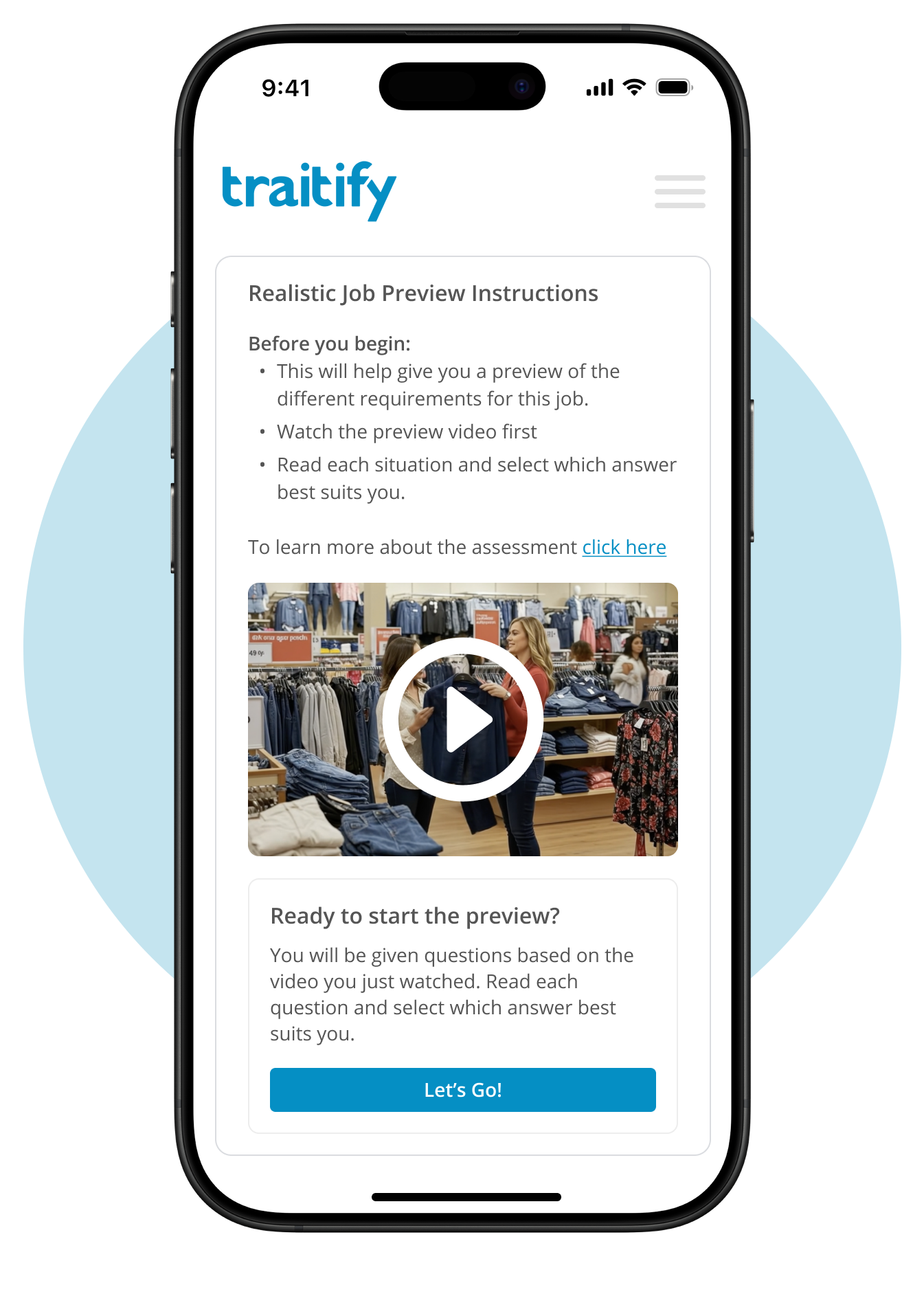
It’s a recruitment tool designed to provide job seekers with a balanced and transparent look at a role. Unlike traditional ‘selling’ recruitment, which focuses exclusively on the positive points, an RJP shares both the desirable and the challenging aspects of the work.
This approach facilitates a dual-matching process. While the company assesses whether the candidate’s skills match the job requirements, the RJP empowers the candidate to decide if the company’s culture and the day-to-day reality match their personal needs. It moves the hiring process from a persuasive sales pitch to an informed mutual understanding.
The effectiveness of RJPs is rooted in several virtuous effects:
In high-volume or high-turnover industries - such as retail, logistics, or hospitality - the cost of attrition is significant.
This is the backdrop to a strong argument for using RJPs - an argument that’s remained solid for many years. For example, data suggests that implementing an RJP can result in an average 12% increase in the survival rate of new employees. In a company hiring 1,000 people a year, retaining an extra 120 employees equates to big savings in recruitment marketing, interviewing time, background checks and training resources. Furthermore, employees who stay are generally more satisfied, as their work aligns with their initial expectations.
To achieve good results, the design process must be deliberate and structured:
The most effective RJPs have evolved beyond simple text or ‘Day in the Life’ videos. They are now interactive experiences, including for example, checks on understanding. These are questions that prompt the candidate to reflect. For example:
This role requires early morning work. Does this fit in with your lifestyle?
This is followed by immediate feedback based on the responses.
By enabling a conscious decision, the RJP ensures that when a candidate clicks ‘Apply’, they aren't just looking for a job - they’re choosing this job, knowing exactly what they are getting into.
They work best for high volume roles, where the job and work environment can be clearly defined, and where it’s likely that candidates may have unrealistic expectations about the role.